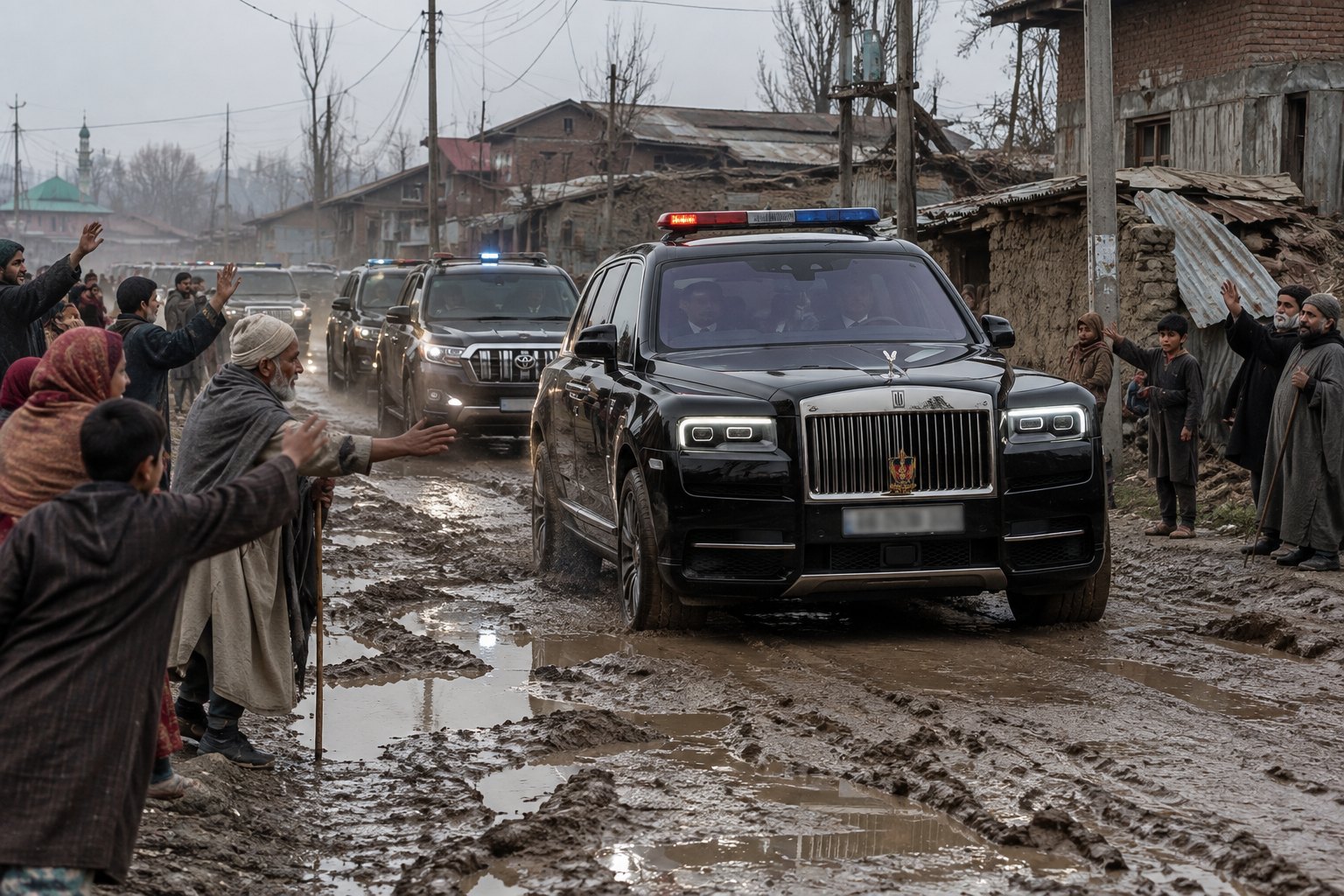
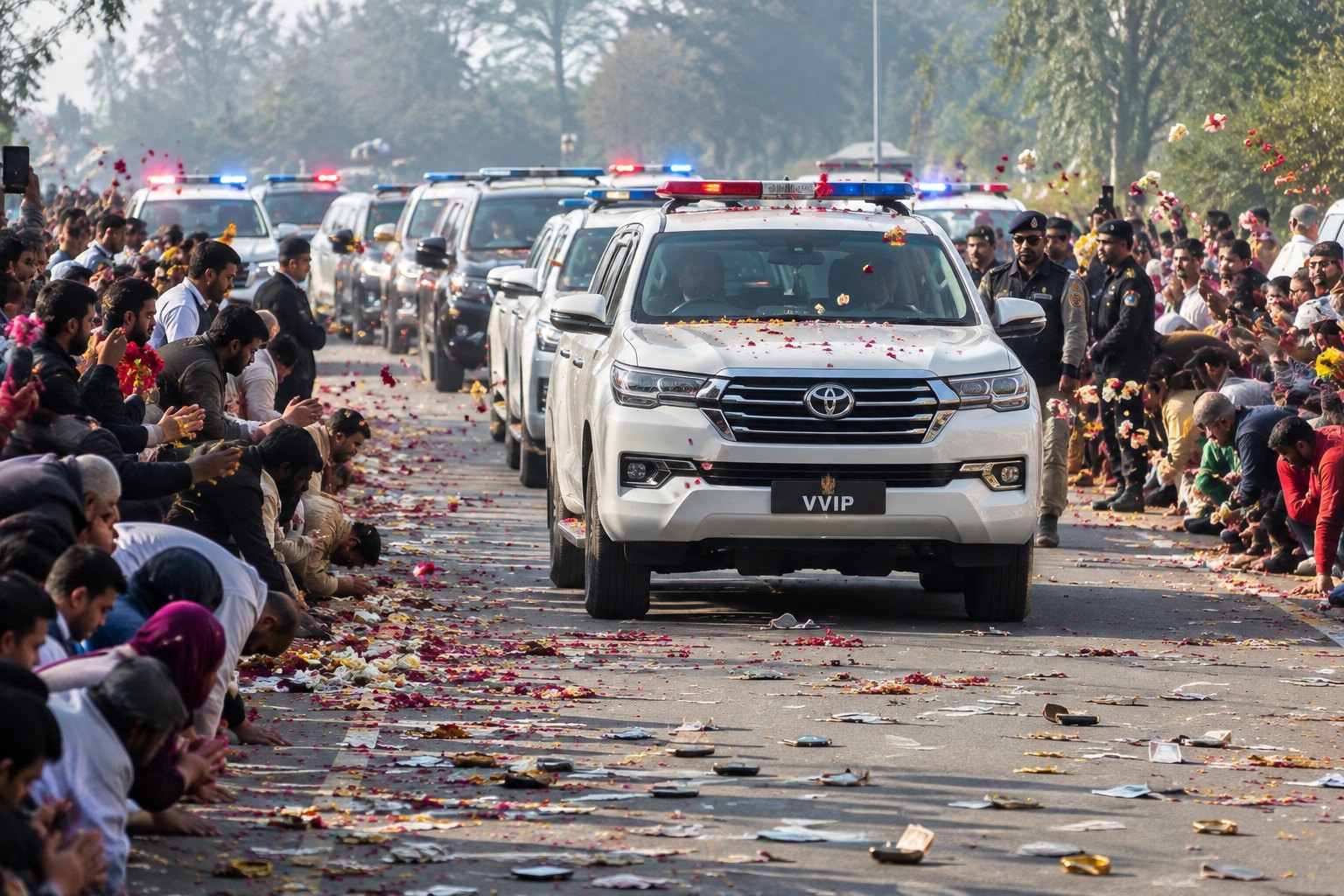
M.G Road: The government has introduced a VVIP Movement Protocol Act requiring citizens to exit their vehicles, bow towards passing convoys and throw their valuables onto the road, after concluding that the public had been confusing a VVIP movement with a traffic jam.
Officials said the measure was necessary to preserve the dignity of public representatives, who had grown tired of being mistaken for a delay.
Under the protocol, motorists must pull over immediately upon sighting a convoy, step out and bow until the last vehicle has passed. Citizens carrying jewellery, cash or other valuables may be asked to place them along the route, allowing distinguished guests to experience the warmth and generosity of the public.
Officials clarified that the valuables are entirely voluntary, though the consequences of misunderstanding this provision remain under consideration.
A senior official defended the move, explaining that VVIPs had demanding schedules and could not be expected to share a road with people who had appointments, jobs, medical emergencies or other routine commitments.
"Every minute is valuable for a VVIP," the official said. "We are simply asking citizens to demonstrate that they understand this. Some have interpreted equality to mean that everyone has the same right to use a road. This misunderstanding must be addressed."
The protocol is also expected to improve traffic management by keeping roads free of ordinary citizens, their vehicles and any unrealistic expectations about reaching their destinations on time.
Emergency Services Accommodated
The government assured the public that emergency services have been fully considered. Ambulances carrying critical patients will be permitted to wait patiently until the convoy passes, allowing the VVIP to reach a scheduled high tea without disruption.
Officials said the arrangement reflected a careful balance between competing priorities. A patient's condition, they explained, could be reviewed upon arrival, whereas a missed high tea might leave several senior officials waiting for their samosas.
"Medical emergencies are unfortunate, but protocol must be maintained," one official said. "We cannot have people assuming that being close to death automatically gives them priority over someone who is running late."
Families accompanying patients have been advised to remain calm during delays and use the time to reflect on the importance of public service. The government is also considering requiring ambulances to display a notice reading *Thank you for your patience. A distinguished person is passing.*
Meanwhile, citizens have been advised to keep their valuables easily accessible while driving, to avoid delaying the convoy while searching for suitable offerings.
Officials stressed that the rules are not intended to inconvenience anyone. The inconvenience, they explained, is incidental to the larger objective of ensuring that important people can travel without being reminded that other people exist.
The government will review the protocol after assessing public compliance and the quantity of valuables collected along major routes.
Until then, citizens are encouraged to cooperate fully.
After all, a road is a public asset, and its most important public purpose is to ensure that certain members of the public never have to wait on it.