Srinagar: Marriage in Kashmir has traditionally involved several important considerations. Compatibility, finances, family approval, employment and, increasingly, whether the couple can afford a wedding hall have all been known to delay the process.
But one reason goes largely unnoticed.
The availability of waazas.
A survey of 212 families, conducted over a single wedding season, found that 61 per cent had postponed a date because no waaze was available. The remaining 39 per cent said they were still checking availability.
For years, young Kashmiris have been blamed for delaying marriage. They are said to be too focused on careers, too particular about their partners, too interested in travelling and, in some cases, simply unwilling to settle down. What has received considerably less attention is the logistical difficulty of actually finding a waaze.
And increasingly, finding a waaze at short notice has become difficult. The problem is particularly severe during peak wedding season, when demand for waazas rises sharply. Families may spend weeks searching, only to discover that the waaze is already booked for another wedding, or travelling somewhere where there is apparently an even greater shortage of available waazas.
Some families have reportedly resorted to calling relatives to ask whether they know anyone who knows anyone who might know a waaze. Researchers noted that a growing number of families now book the waaze first, and only then the hall, the date and, in some cases, the groom.
The situation has created a peculiar contradiction. Young people are being repeatedly told that they should get married, while the waazas who explain why they should get married are increasingly difficult to book.
There are, of course, other factors. Rising education levels, unemployment, housing costs and changing expectations have all been discussed extensively. But these explanations overlook an important practical consideration: a Kashmiri cannot simply get married without first being told by a waaze, at considerable length, that he is not available on their preferred dates.
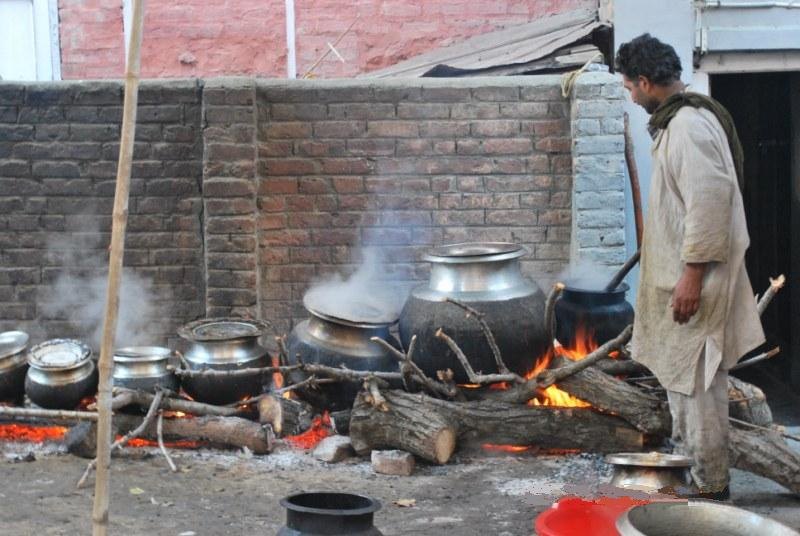
Families also report difficulties of temperament. The most in-demand waaza is understood to reach the venue at 5:30 am, announce himself at a volume the whole neighbourhood can appreciate, and ask that every ingredient be produced at once, ideally before anyone has been introduced to him. He then inspects the facilities, which are found wanting in several respects. Proceedings do not begin until each member of his team has been given a packet of cigarettes. Hosts describe this as non-negotiable and, on balance, reasonable, since no family has yet found out what happens if they decline.
The most sought-after waazas are booked months in advance. Some couples have reached the age at which relatives begin asking when they intend to marry, only to discover that the nearest available waaze is not free until next season. By then, another year has passed.
The consequences extend beyond individual families. If the shortage continues, Kashmir could eventually face a situation in which couples are ready, families are agreeable and wedding halls are available, but no waaze is available to cook.