
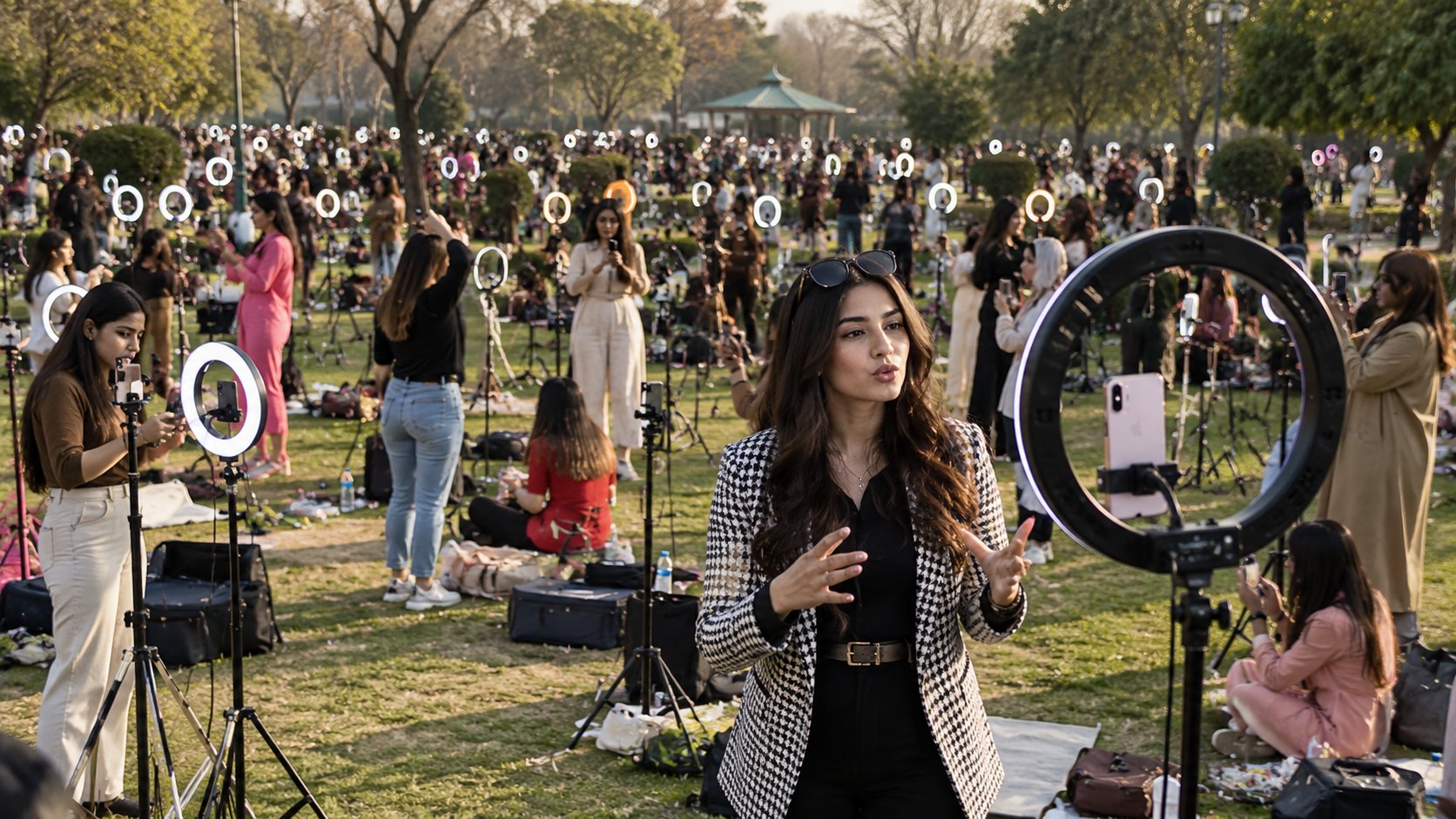
Instagram: The number of influencers in the country has risen sharply, with thousands now offering guidance on fitness, finance, relationships, productivity and, increasingly, matters on which nobody has asked.
A survey of 1,400 adults found that 71 per cent described themselves as content creators. The remaining 29 per cent said they were currently being influenced by several of them, and asked not to be contacted.
"Everyone appears to be influencing everyone else," said one industry analyst. "Supply has grown considerably. Demand has stepped out to film something."
The effects are most visible online, where the few remaining users are advised daily to wake at 5 a.m., quit their jobs, buy property, avoid sugar, drink more coffee and purchase a course explaining how to do all of the above, which, on closer inspection, is how the instructor earns his living.
Several influencers have reportedly begun following other influencers for inspiration and, in some cases, for numbers. One creator said his most engaged follower was another creator, who comments on every post with a link to her own.
Brands are also concerned. "With everyone a creator, it is becoming difficult to establish who is a consumer," said one marketing executive, adding that a recent campaign had reached two million accounts, all of which were running campaigns of their own.
Some creators have responded with incentives. Free products, discount codes and, in one case, a modest monthly stipend are now being offered to followers who agree to be influenced on a regular basis. Early results are described as encouraging, though retention remains a problem, as most recipients have since started accounts of their own.
A course titled How to Be Influenced: Five Habits of Highly Receptive People is understood to be selling well, mainly to other creators. Its instructor said he had not been influenced by anyone since 2019, but was confident the material would hold up.
Industry experts have suggested that the sector may eventually return to the traditional model of finding ordinary people and convincing them to buy things. Few creators were certain how this worked. "It sounds like a lot of talking to strangers," said one. "Without lighting."
The author of this report has since started a newsletter on the subject. It has one subscriber, a creator, who has asked about a collaboration.